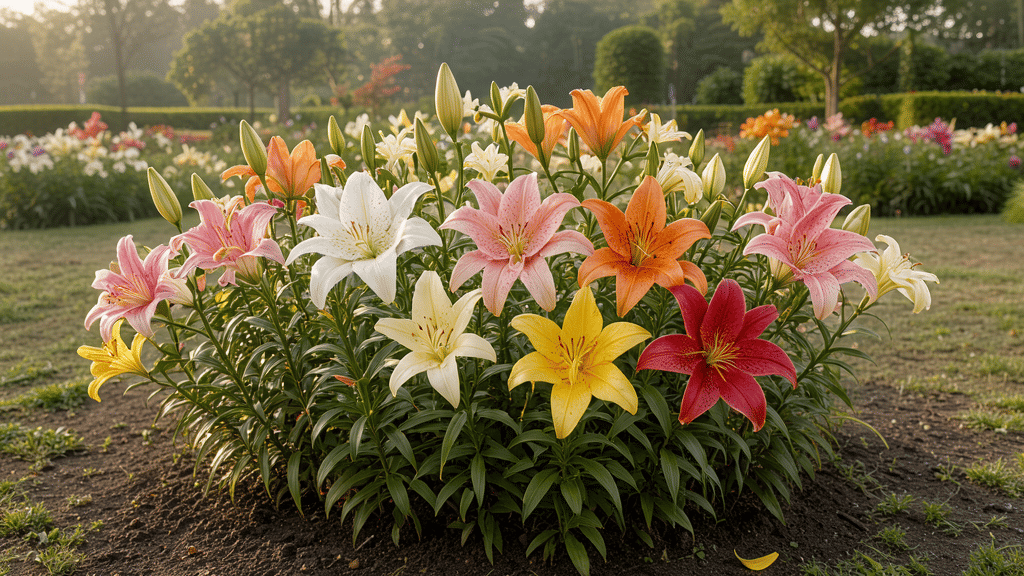
Lilies are a captivating and diverse group of flowering plants, cherished for their striking blooms and graceful presence. With a wide range of varieties available, these elegant flowers can transform any garden into a vibrant oasis. Here’s a closer look at some popular lily varieties and tips on how to cultivate them for a garden that stands out in terms of lushness and quality.
Popular Lily Varieties
-
Asiatic Lilies Asiatic lilies are among the easiest to grow and come in a wide array of colors, from deep reds and vibrant oranges to sunny yellows and pure whites. These lilies are early bloomers, typically flowering in early to mid-summer. Their upward-facing blooms and strong stems make them ideal for any garden setting.
-
Oriental Lilies Known for their large, fragrant blooms, Oriental lilies are a favorite among gardeners looking for both visual and aromatic appeal. These flowers bloom later in the season compared to Asiatic lilies and can thrive in a variety of colors, such as pink, red, and white. Their captivating fragrance makes them perfect for planting near patios and walkways.
-
Trumpet Lilies As their name suggests, trumpet lilies have distinctive trumpet-shaped blooms. Their dramatic flowers and impressive height make them a stunning addition to any garden. Although they require a bit more maintenance, their captivating presence is worth the effort.
-
Martagon Lilies For those interested in a more subtle but unique variety, Martagon lilies are an excellent choice. With their downward-facing, turk’s cap blooms, they bring an old-world charm to gardens. They work well in shaded areas and can provide a woodland feel when planted en masse.
-
LA Hybrids LA hybrids are the result of crossing Asiatic and Longiflorum lilies. These hybrids combine the hardiness of Asiatic lilies with the long-lasting blooms of Longiflorums. They come in a variety of colors and are valued for their vigor and ability to produce abundant flowers.
Growing Tips for Lush Lilies
-
Choose the Right Location: Lilies thrive best in areas where they receive full sun for at least six hours a day. However, they can tolerate some afternoon shade, especially in hotter climates.
-
Well-Drained Soil: Good drainage is crucial for lily health. They prefer slightly acidic to neutral pH levels and benefit from organic matter like compost to improve soil structure.
-
Spacing and Depth: When planting lily bulbs, ensure they are spaced adequately apart—generally about 12 to 18 inches—to allow for proper air circulation. Plant them at a depth of about 3 times the height of the bulb.
-
Watering Needs: Keep the soil consistently moist, but avoid waterlogging. Deep watering is ideal, encouraging roots to grow further into the soil.
-
Fertilization: Use a balanced, slow-release fertilizer in early spring as growth begins. Avoid high-nitrogen fertilizers, which can promote lush foliage at the expense of blooms.
-
Pest and Disease Management: Watch out for common pests like aphids and lily beetles. Regular inspections and the use of appropriate pesticides can help keep these at bay.
With these diverse lily varieties and cultivation tips, your garden can become a haven of delightful color and elegance. By choosing the right types and providing optimal care, you’ll enjoy their beauty and enhance the overall appeal of your garden habitat.